
What Is an ADU and Why Are Maine Homeowners Building Them?
An accessory dwelling unit, commonly called an ADU, is a self-contained living space built on the same property as an existing single-family home. ADUs come in many forms: detached cottages in the backyard, garage conversions, basement apartments, or additions attached to the main house. What they all share is independent living capability — a kitchen, bathroom, sleeping area, and separate entrance.
Southern Maine homeowners are building ADUs for several compelling reasons. Multigenerational living is becoming more common as families look for ways to keep aging parents close while maintaining everyone's independence. In communities like Portland, South Portland, and Falmouth, homeowners are adding ADUs to generate rental income that helps offset mortgage costs and property taxes. In the Lakes Region around Casco and Naples, ADUs serve as guest houses for visiting family or as year-round caretaker housing on seasonal properties.
Maine has taken significant steps to encourage ADU construction. State legislation passed in recent years has required municipalities to allow ADUs in most residential zones, removing many of the barriers that previously made these projects difficult to permit. This means more homeowners than ever have the opportunity to add an ADU to their property.
ADU Types: Finding the Right Fit for Your Property
The best ADU design depends on your lot size, budget, intended use, and local zoning requirements. Here are the most common types we build in Southern Maine.
Detached ADUs are standalone structures built separately from the main house. They offer the most privacy and flexibility in design, and they work well on larger lots common in Casco, Naples, Freeport, and Falmouth. A detached ADU can be designed to complement your home's architecture while functioning as a completely independent living space.
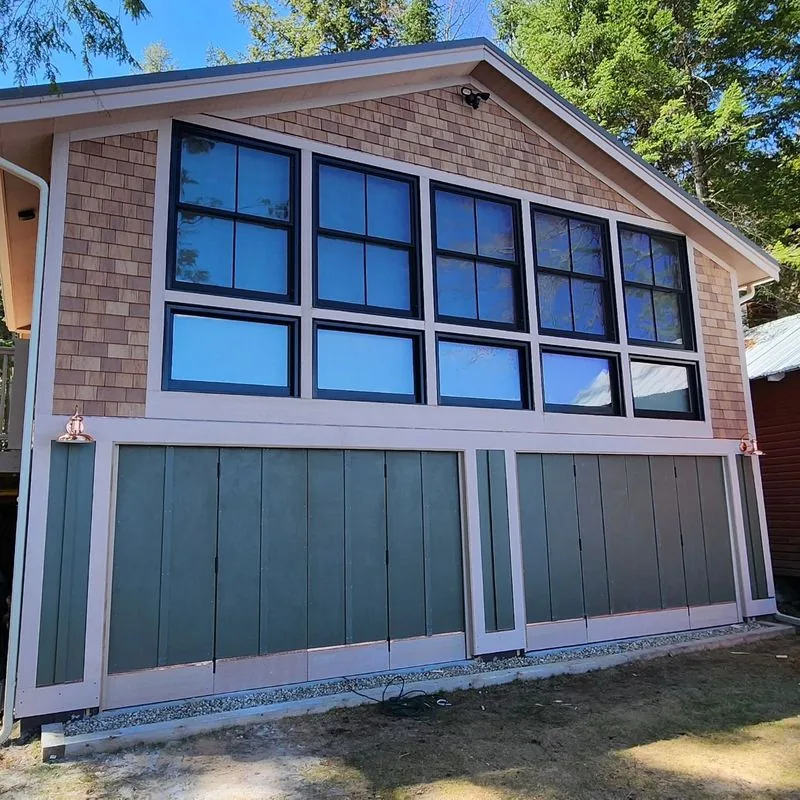
Garage conversions transform an existing structure into living space. This is often the most cost-effective approach because the shell — foundation, walls, and roof — already exists. Portland and South Portland homeowners frequently convert attached or detached garages into apartments or in-law suites. The key challenges are insulation, ceiling height, and running utilities to the space.
Basement conversions work well in homes with walkout or daylight basements. The foundation and structure are already in place, which reduces costs significantly. Natural light and ceiling height are the main design considerations. Egress windows and a separate entrance are typically required by code.
Attached additions extend the main house with a new wing or second-story addition that functions as a separate unit. This approach shares some structural elements with the main house, which can reduce costs, while still providing a distinct living space with its own entrance.
Zoning and Permitting in Southern Maine
Maine's statewide ADU legislation has simplified the process, but local zoning still governs important details like maximum ADU size, setback requirements, parking, and owner-occupancy rules. Each town handles these differently.
Portland has been one of the most ADU-friendly communities in Maine, allowing both attached and detached ADUs in residential zones with relatively straightforward permitting. The city has actively encouraged ADU construction as part of its strategy to increase housing supply.
South Portland, Cape Elizabeth, Falmouth, and Freeport each have their own specific requirements regarding lot size minimums, maximum square footage for the ADU, and design standards. In some communities, the ADU must be smaller than the primary dwelling. Others require that the property owner live in either the main house or the ADU.
In the Lakes Region communities of Casco and Naples, shoreland zoning adds another layer of regulation for properties near water. Setbacks from the water, impervious surface limits, and septic system capacity all factor into ADU feasibility on lakefront lots.
Before committing to an ADU project, research your town's specific requirements or work with a builder who understands local permitting. We help homeowners navigate this process as part of our ADU construction service, coordinating with local code enforcement and planning departments to ensure your project meets all requirements from the start.
What Does ADU Construction Cost in Maine?
ADU construction costs in Southern Maine vary widely based on the type, size, and finish level. Here are realistic ranges based on current market conditions.
Garage conversions typically run $50,000 to $120,000 depending on the condition of the existing structure, the extent of utility work needed, and the quality of finishes. This is generally the most affordable path to a finished ADU.
Basement conversions fall in a similar range, $40,000 to $100,000, depending on whether the space already has adequate ceiling height, natural light, and access to utilities. Homes that need significant excavation or waterproofing work will trend toward the higher end.
Detached ADUs are the most expensive option, typically $150,000 to $300,000 or more for a well-built unit with full utilities, quality finishes, and proper site work. The wide range reflects differences in size, complexity, and finish level. A 400-square-foot studio cottage costs significantly less than an 800-square-foot one-bedroom with a full kitchen and high-end finishes.
Attached additions fall somewhere between garage conversions and detached builds, usually $100,000 to $200,000, since they share some structural elements with the main house.
These numbers include design, permitting, site work, construction, and finish carpentry. Septic system upgrades, if needed, can add $15,000 to $30,000 or more depending on the property.
Design Considerations for Maine's Climate
An ADU in Southern Maine needs to handle the same harsh conditions as any primary residence. Cutting corners on insulation, moisture management, or material selection in a smaller structure is a recipe for problems.
Insulation and energy efficiency should meet or exceed current Maine building code requirements. A well-insulated ADU is comfortable year-round and affordable to heat. We recommend high-performance wall assemblies, quality windows, and air sealing that minimizes drafts and moisture infiltration.
For lakefront properties in Casco and Naples, moisture management is critical. Proper vapor barriers, ventilation, and material choices prevent the condensation and mold issues that plague poorly built structures in humid lake environments.
Coastal properties in Cape Elizabeth and South Portland face salt air exposure that accelerates corrosion and material degradation. Exterior materials, fasteners, and hardware all need to be rated for coastal conditions.
Mechanical systems for an ADU need careful planning. A separate mini-split heat pump system is the most common and cost-effective approach, providing both heating and cooling without the need for ductwork. Plumbing, electrical, and septic connections need to be sized appropriately and may require upgrades to the existing property infrastructure.
Return on Investment and Long-Term Value
An ADU is one of the most financially productive improvements you can make to a property. The return comes in several forms.
Rental income is the most direct benefit. In Portland and surrounding communities, a well-finished one-bedroom ADU can command $1,200 to $2,000 or more per month in rent. In the Lakes Region, seasonal rental rates during peak summer months can be even higher. Over time, rental income can significantly offset or even cover the construction cost.
Property value increases are well-documented. Homes with permitted, well-built ADUs consistently appraise higher than comparable homes without them. The exact premium varies by market, but a quality ADU typically adds 20 to 30 percent of its construction cost to the overall property value, and in tight housing markets, sometimes more.
Flexibility is the less quantifiable but equally important benefit. An ADU that serves as a rental today can become housing for an aging parent tomorrow, or a home office next year, or a space for an adult child saving for their own home. That adaptability makes the investment relevant across different life stages.
Maine's housing shortage means demand for quality rental units remains strong across Southern Maine. A well-built ADU in a desirable community is unlikely to sit vacant.
Getting Started with Your ADU Project
The first step is understanding what your property can accommodate. Check your lot size against local zoning requirements, evaluate where a structure could be placed given setback rules, and consider how utilities will connect.
Next, establish your budget and intended use. An ADU built for a family member has different design priorities than one intended for rental income. Knowing the purpose upfront helps guide every decision from size and layout to finish level.
Work with a builder who has specific ADU experience. ADU construction involves navigating zoning, coordinating utilities, and often working in tight spaces close to existing structures. It is not the same as building on an empty lot, and experience with the specific challenges matters.
At Maineland Carpentry & Finish, we handle ADU projects from initial feasibility assessment through final finish work. We coordinate with local permitting offices, manage the construction process, and deliver the same precision craftsmanship in your ADU that we bring to every project. Contact us to discuss your ADU plans and get a realistic assessment of what is possible on your property.
Related Services
Have Questions About Your Project?
We are happy to share our expertise. Reach out any time.